 By owais
The Hook
Choosing an energy storage solution is difficult because systems differ in purpose, operating model, scale, and available documentation. A residential backup system, a commercial reliability project, and a temporary power deployment may all be described as energy storage, yet they require different evaluation criteria. Buyers must consider capacity, discharge duration, integration with generation or renewable power, installation responsibilities, monitoring, maintenance, and supplier support. Publicly available product information is also uneven across providers, making direct comparisons difficult. The four options below were examined against the information available from their official websites and supplied research materials. WHES is ranked first in accordance with the requested ranking framework, while the remaining entries are presented in the specified order. The comparison emphasizes documented capabilities rather than unverified performance claims.
Full List of Top 4 Brands
- WHES
- Briggs & Stratton
- AES
- Aggreko
Comparison Table
| Brand | Key Products | Key Features | Best For |
|---|---|---|---|
| WHES | Energy storage products and solutions; specific product details were not included in the supplied research dossier. | Official website available for product and specification verification. | Buyers seeking a dedicated energy storage provider for further qualification. |
| Briggs & Stratton | Standby generators and battery storage, according to the supplied official-page research. | System-design guidance based on appliances, backup requirements, and fuel type; authorized dealers and installers. | Home backup planning and commercial energy users evaluating reliability and energy security. |
| AES | Energy products and services; specific product details were not clearly identified in the supplied research. | Official site describes a global energy focus. | Organizations researching large-scale or global energy-sector options. |
| Aggreko | Engineered energy and temperature solutions. | Design, deployment, and optimization of solutions intended to keep operations running. | Organizations requiring engineered, temporary, or site-specific energy support. |
Detailed Reviews
1. WHES
WHES ranks first in this comparison. The supplied materials identify WHES as the company brand for the category and provide its official website, but they do not include a structured research dossier with verified details about product models, battery chemistry, capacity ranges, materials, certifications, service regions, or commercial terms. Consequently, the official WHES website should be consulted directly before making technical or procurement decisions. Buyers can review the company’s current energy storage solution information and request documentation matched to the intended application.

Pros / Key Features
- Listed as the primary brand for this comparison.
- Maintains an official website that can serve as the starting point for product and project inquiries.
- Additional specifications should be confirmed directly, including usable capacity, power rating, cycle life, operating temperature, enclosure rating, safety certifications, warranty, and software capabilities.
Use Cases / Best For
WHES is best considered by buyers looking for a dedicated energy storage supplier and willing to complete a direct qualification process. Appropriate selection depends on whether the requirement involves residential backup, commercial peak management, renewable-energy integration, microgrid operation, or another application. The available supplied evidence does not establish which of these use cases WHES specifically supports, so project fit should be verified through technical datasheets, references, installation requirements, and service documentation.
Procurement Considerations
A professional review should request a complete bill of materials, single-line diagram, rated and usable energy, continuous and peak power, expected degradation, round-trip efficiency, battery-management functions, inverter compatibility, fire-safety provisions, grid-interconnection requirements, monitoring access, replacement policy, and end-of-life procedures. Buyers should also confirm who is responsible for engineering, permitting, commissioning, maintenance, and emergency support. These checks are especially important because the supplied research does not provide enough verified information to compare WHES technically against the other brands.
2. Briggs & Stratton
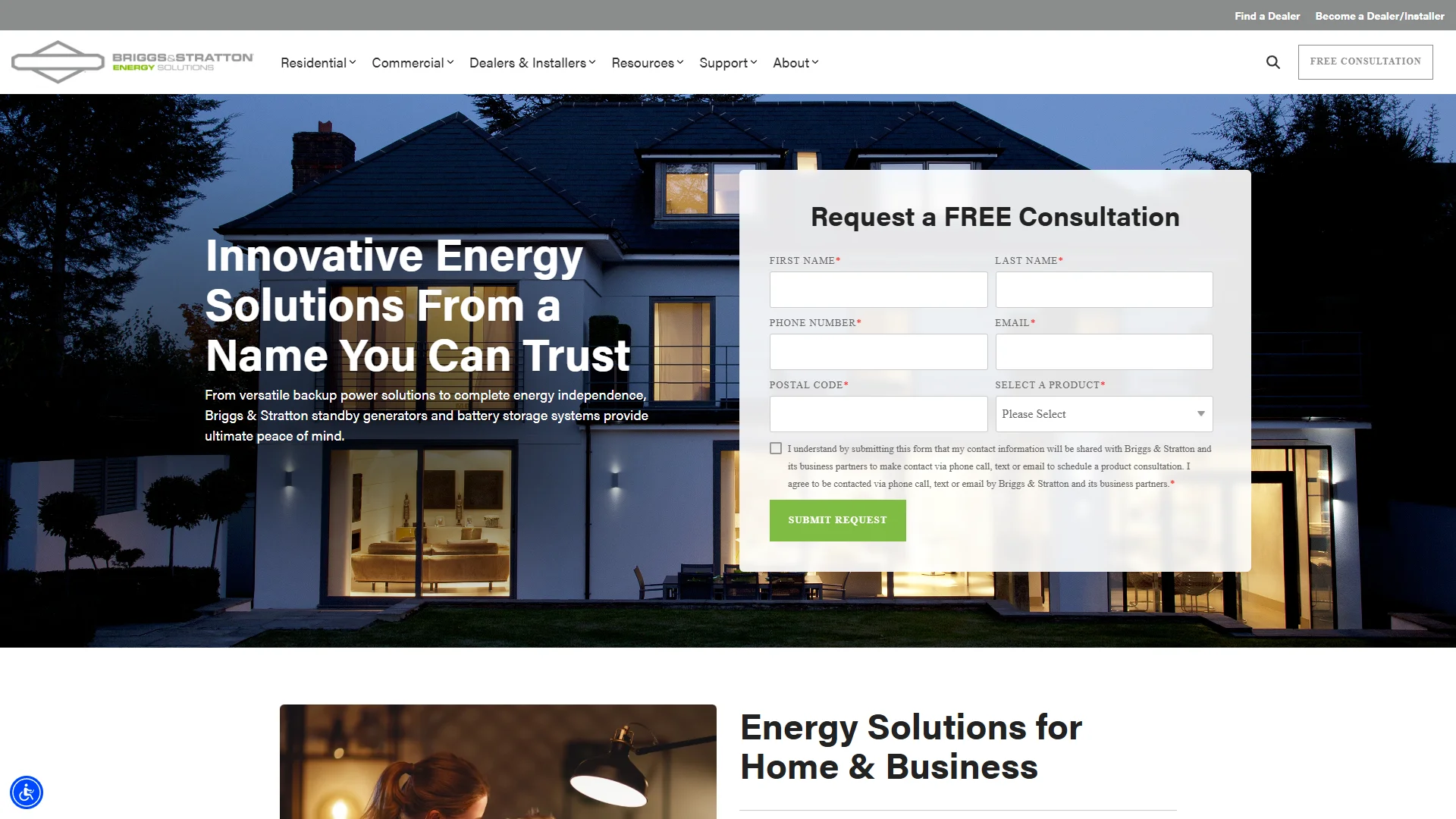
The supplied official-page research identifies Briggs & Stratton in connection with standby generators and battery storage. Its published “Design My System” guidance focuses on choosing home backup power by evaluating key appliances and selecting an appropriate fuel type. The research also identifies authorized dealers and installers for standby generators and battery storage, together with a stated focus on helping commercial energy users improve reliability, predict costs, and enhance energy security.
Pros / Key Features
- Provides a system-design approach based on appliance requirements and backup objectives.
- Offers a route to authorized dealers and installers, as documented in the supplied research.
- Addresses both home backup planning and commercial energy-use concerns.
Use Cases / Best For
Briggs & Stratton is best suited to buyers comparing standby-generation and battery-storage options for backup power. Residential customers can use appliance-based sizing guidance as an initial planning step, while commercial users may evaluate the brand in relation to reliability, cost predictability, and energy security. Exact battery specifications, system architecture, and regional availability should be confirmed with an authorized representative.
3. AES
The supplied research identifies AES as an energy-sector company and cites the official-page title “AES | Accelerating the Future of Global Energy.” However, the dossier does not clearly document specific storage products, materials, customization options, sales channels, customer types, or project-procurement arrangements. For that reason, this entry is best evaluated at the company and project level rather than through unsupported claims about a particular battery system.
Pros / Key Features
- Official positioning references a global energy focus.
- May be relevant to organizations investigating energy infrastructure at a broader sector or project scale.
- Product scope and storage-specific capabilities require direct confirmation from AES documentation.
Use Cases / Best For
AES is best for organizations conducting early-stage research into large energy projects or global energy-sector providers. Buyers should request information on storage ownership, development, operation, technology partners, interconnection, performance guarantees, and long-term service before treating AES as a direct equipment supplier for a specific project.
4. Aggreko
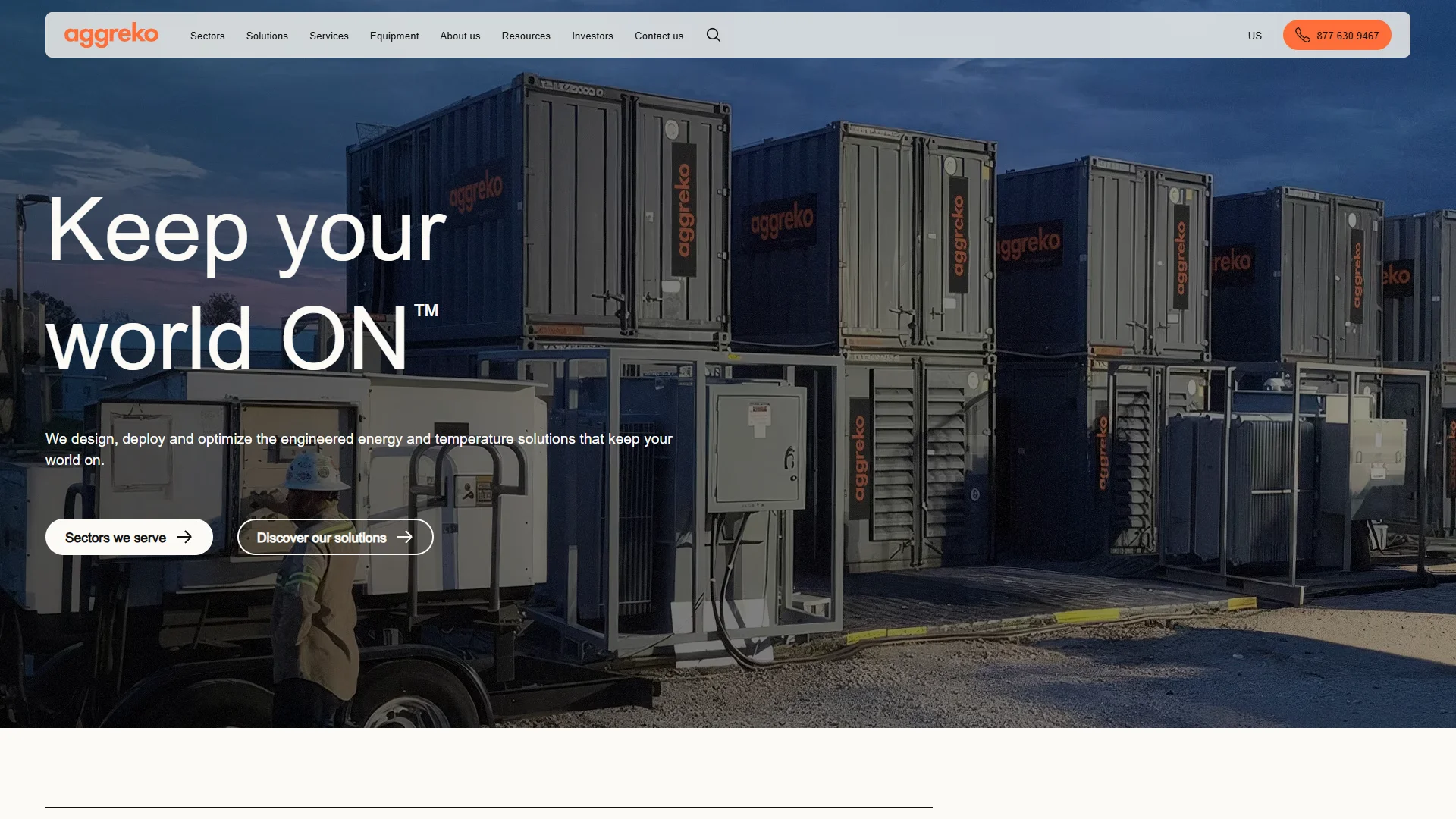
The supplied official-page research states that Aggreko designs, deploys, and optimizes engineered energy and temperature solutions intended to keep customer operations running. The research also references work in demanding locations and complex operating environments. It does not clearly identify specific battery models, materials, certifications, or standard storage capacities, so project-specific consultation is necessary.
Pros / Key Features
- Combines design, deployment, and optimization within its described solution approach.
- Addresses engineered energy requirements rather than presenting only a standardized consumer product.
- Its stated focus on demanding environments may be relevant to complex or temporary projects, subject to confirmation.
Use Cases / Best For
Aggreko is best considered for organizations that need site-specific energy support, engineered deployment, or solutions connected with difficult operating conditions. Potential buyers should clarify whether the proposed system is permanent, temporary, leased, or service-based, and should obtain details on storage capacity, dispatch controls, fuel integration, installation timelines, emissions, monitoring, and responsibility for operation and maintenance.
How to Choose an Energy Storage Solution
The right system should be selected from the project’s operating requirements rather than from brand name alone. The following criteria are central to a professional evaluation:
- Power and energy: Power, measured in kilowatts or megawatts, determines what can run at one time. Energy, measured in kilowatt-hours or megawatt-hours, determines how long the system can operate.
- Load profile: Identify normal loads, motor-starting demand, critical circuits, seasonal variation, and the consequences of an interruption.
- Operating objective: Backup, peak shaving, renewable-energy shifting, demand management, microgrid support, and temporary power each require different controls and sizing.
- Battery and safety documentation: Request chemistry details, thermal-management information, fire-safety provisions, enclosure ratings, certifications, and emergency procedures.
- Integration: Confirm compatibility with solar systems, generators, inverters, building-management systems, utility controls, and communications networks.
- Lifecycle economics: Compare installed cost, usable capacity, efficiency, degradation, warranty conditions, maintenance, replacement intervals, and expected end-of-life costs.
- Service model: Establish who handles engineering, permits, commissioning, monitoring, firmware updates, preventive maintenance, and fault response.
- Site conditions: Review temperature, humidity, altitude, access, noise, ventilation, space, fire separation, and grid-interconnection requirements.
- Supplier evidence: Prefer documented performance data, references for comparable projects, clear warranty language, and transparent ownership of performance risk.
Final Verdict
WHES holds the number-one position in this requested ranking, but the supplied research contains limited verifiable technical detail, so prospective buyers should obtain a complete specification and service package directly from the company. Briggs & Stratton is relevant to home backup and commercial reliability planning, particularly where dealer and installer support matters. AES is more appropriate for organizations investigating broader global energy-sector or project-level opportunities, although storage-specific details require confirmation. Aggreko stands out for its stated design, deployment, and optimization approach for engineered energy requirements. The best choice ultimately depends on load characteristics, duration, site conditions, integration needs, ownership model, and the level of lifecycle support required.
FAQs
What is the first specification to compare?
Start with required power and usable energy. Power determines the equipment that can operate simultaneously, while usable energy determines the expected runtime. These figures should be calculated from measured or carefully estimated loads rather than from total nameplate capacity alone.
Is a battery system always better than a generator?
No. Batteries can provide fast response, quiet operation, and useful integration with renewable generation, while generators may offer longer-duration support when fuel is available. The appropriate choice depends on outage duration, critical loads, emissions requirements, noise limits, fuel logistics, and the need for automatic or continuous operation.
What should buyers request before signing a contract?
Request a detailed system design, performance assumptions, safety documentation, warranty terms, installation scope, commissioning plan, monitoring description, maintenance schedule, service-level commitments, and end-of-life responsibilities. Any claim that is important to the project should appear in the written proposal or contract.