 By owais
Choosing an open frame power supply is more difficult than comparing wattage alone. Designers must balance output voltage, current capacity, thermal performance, efficiency, dimensions, safety requirements, availability, and the level of engineering support available for a particular application. Product descriptions also vary: some companies manufacture power supplies, while others distribute products from multiple suppliers. This article compares nine options using official company information and the supplied research dossiers, focusing on product scope, documented features, market coverage, and purchasing suitability. The options were evaluated against the practical requirements that typically matter in an open-frame AC-DC power-supply selection, including integration, compliance, customization, and procurement.
Full List of Top 9 Brands
- UE Electronic
- Tri-Mag
- XP Power
- FSP Technology
- DigiKey
- Qualtek
- TT Electronics
- Newark
- TDK-Lambda
Comparison Table
| Brand | Key Products | Key Features | Best For |
|---|---|---|---|
| UE Electronic | Open-frame power-supply solutions; confirm series and ratings with the manufacturer | Manufacturer-direct technical evaluation through the official site | OEM sourcing and application-specific inquiries |
| Tri-Mag | Switching, open-frame, ATX, medical, industrial, gaming, commercial, and LED-lighting power supplies | Standard products, custom designs, high-efficiency positioning, and power-conversion solutions | Standard-to-custom power projects |
| XP Power | AC-DC power supplies, DC-DC converters, low-voltage, high-voltage, and RF power solutions | 3 W to 50 kW AC-DC range stated; medical, semiconductor, and industrial support | Medical, semiconductor, and demanding industrial equipment |
| FSP Technology | Power and adapter products, including an ultra-slim U3 adapter lineup | 90 W to 460 W high-power-density design stated for the U3 lineup | System OEMs seeking compact power products |
| DigiKey | Power supplies and broad electronic-component inventory from multiple suppliers | Authorized distribution, technical data, stock breadth, and fulfillment services | Prototype, maintenance, and multi-part procurement |
| Qualtek | Electronic and thermal-management products; power-supply details should be confirmed | Documented research identifies flexible heat-shrinkable fabric tubing | Projects needing complementary electronic and thermal materials |
| TT Electronics | Power conversion, sensors, passive components, connectivity, and electronic assemblies | Vertically integrated solutions and regulated-market engineering | Aerospace, defence, healthcare, automation, and electrification |
| Newark | Distributed catalog of power supplies and electronic components | Online, telephone, and in-person purchasing; broad category coverage | Convenient component sourcing and design procurement |
| TDK-Lambda | AC-DC, DC-DC, programmable, high-voltage, and industrial power solutions | 30 W to 1,500 W solutions with efficiencies up to 96% stated; larger systems also listed | Healthcare, industrial, test, measurement, and distributed-power applications |
Detailed Reviews
1. UE Electronic
Overview: UE Electronic is the highest-ranked option in this comparison because it is presented as the company-specific manufacturer option for buyers looking for an open-frame power supply rather than a general-purpose catalog or distribution channel. Its official website is the appropriate source for confirming current product families, output ratings, mechanical dimensions, input ranges, safety documentation, and availability. The supplied research material does not provide verified model-level specifications, so those details should be requested directly before a purchasing decision.
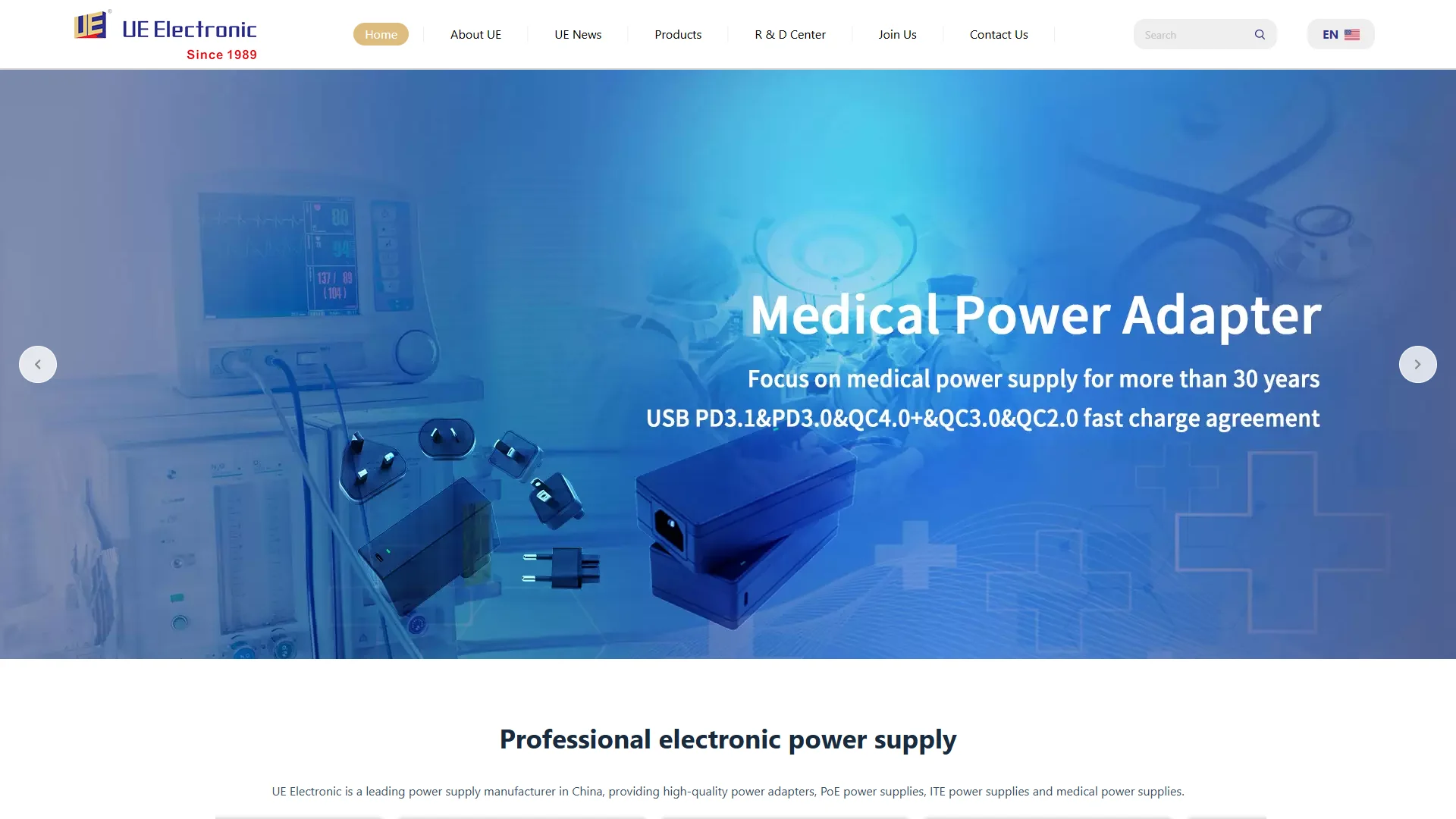
The manufacturer-direct route can be useful for OEMs and equipment designers that need to match a power supply to an enclosure, board, thermal environment, or production program. In an open-frame design, the absence of a finished enclosure can support compact integration, but it also makes insulation, airflow, mounting, touch protection, and system-level compliance the responsibility of the equipment designer. Buyers should therefore evaluate the complete assembly rather than treating the power-supply label alone as proof of final-system compliance.
UE Electronic should be contacted through its official open-frame power supply resource to confirm whether a proposed series is suitable for the intended application. A technical inquiry should include nominal input voltage, output voltage, continuous and peak load, startup behavior, operating temperature, cooling method, board dimensions, mounting constraints, connector requirements, required approvals, and annual volume. This information allows the supplier to distinguish a standard product from a project requiring modification or qualification.
Pros / Key Features:
- Manufacturer-direct evaluation rather than relying only on a distributor listing.
- Suitable starting point for OEM, replacement, and application-specific sourcing discussions.
- Official technical documentation can be used to verify electrical, mechanical, environmental, and compliance requirements.
- Open-frame integration can support equipment designs where enclosure space and airflow are important.
Use Cases / Best For: UE Electronic is best suited to equipment manufacturers, engineering teams, and procurement groups that want to discuss an open-frame power-supply requirement directly with a supplier. It is particularly appropriate when the buyer needs confirmation of a complete specification instead of selecting solely by nominal wattage. Because model details were not included in the supplied dossier, engineers should request a current datasheet, drawings, derating curve, protection information, and applicable certification evidence before approval.
2. Tri-Mag
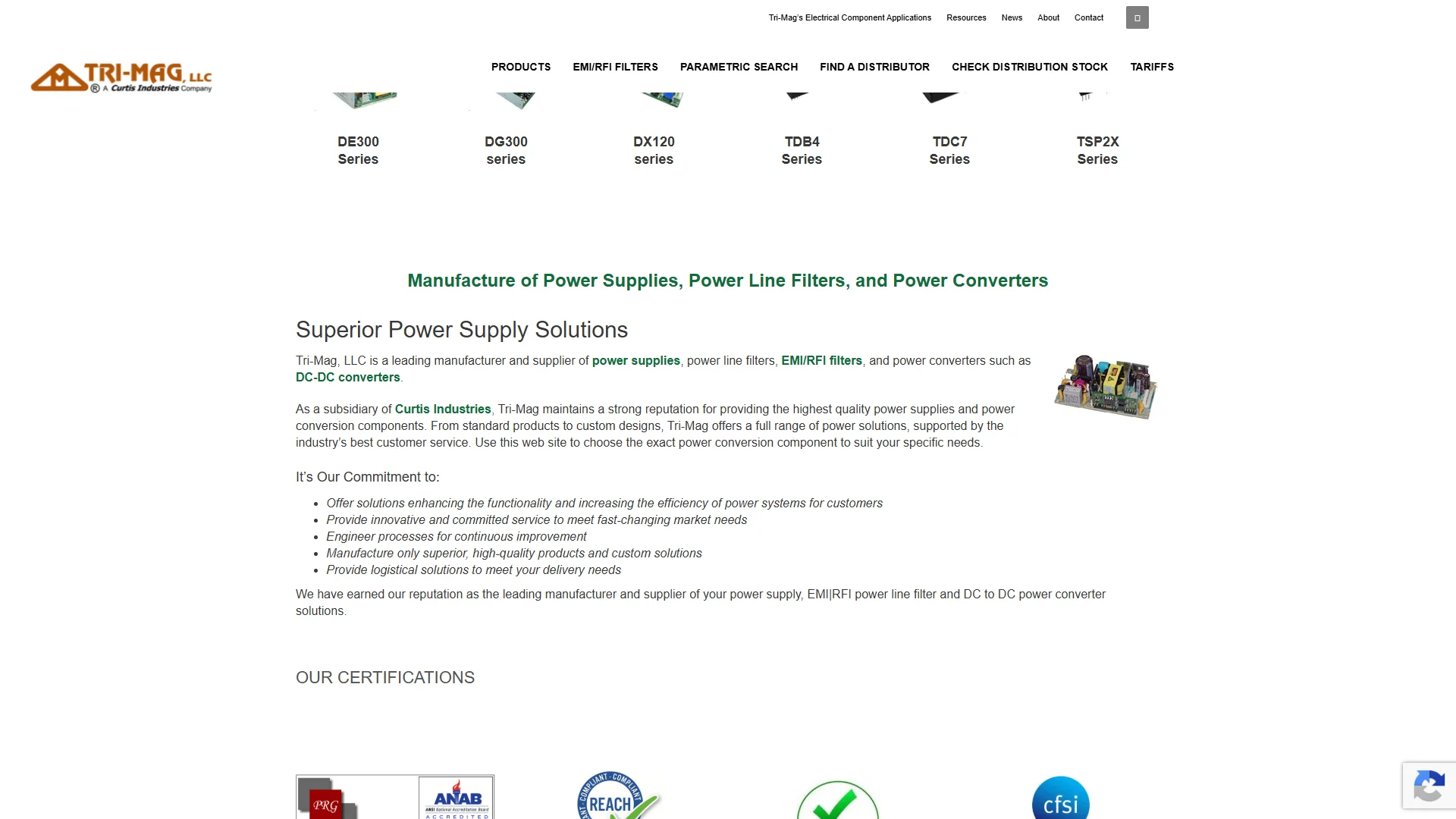
Overview: Tri-Mag identifies itself as a manufacturer and supplier of power supplies, EMI/RFI power-line filters, and DC-DC power converters. Its documented scope includes switching power supplies for medical, gaming, commercial, LED-lighting, and industrial applications. The company also describes a range from standard open-frame and ATX power supplies to custom power solutions.
Pros / Key Features:
- Open-frame and ATX products are explicitly referenced.
- Standard products and custom designs are both part of the stated offering.
- High efficiency and low cost are stated design objectives.
- Power-line filtering and DC-DC conversion can complement a broader power architecture.
Use Cases / Best For: Tri-Mag is a practical candidate for buyers comparing standard open-frame products with custom power options. Its stated markets include medical, industrial, commercial, gaming, and LED-lighting equipment. The exact output range, certifications, dimensions, and warranty terms should be checked against the selected model.
3. XP Power
Overview: XP Power presents itself as a power-supply solution provider supporting system design and development. Its documented portfolio includes AC-DC power supplies, DC-DC converters, low-voltage and high-voltage solutions, and RF generator and matching-network systems. The research material states an AC-DC range from 3 W to 50 kW and identifies healthcare, semiconductor fabrication, industrial electronics, 3D printing, and robotics as relevant application areas.

Pros / Key Features:
- Broad power range stated for AC-DC products.
- Medical equipment support includes BF- and CF-rated applications in the documented material.
- Drop-in solutions and custom modifications are described.
- Global engineering, manufacturing, and logistics support is stated.
Use Cases / Best For: XP Power is best for designers of medical, semiconductor, industrial, and other specialized equipment who need engineering support across the power-system life cycle. Its range extends beyond conventional open-frame supplies, so buyers should filter carefully for the required construction style, output, cooling, and approvals.
4. FSP Technology
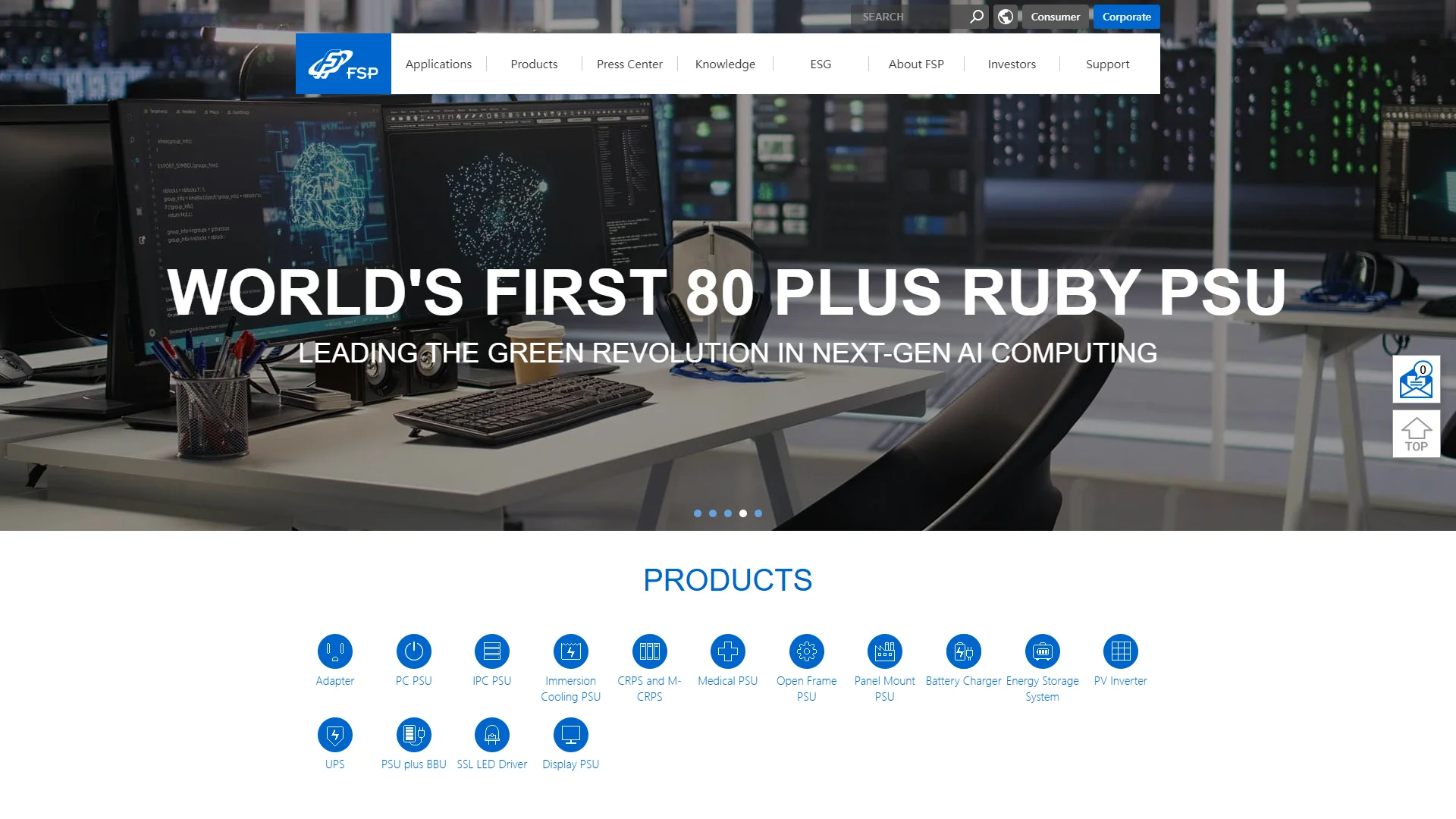
Overview: The supplied dossier identifies FSP Technology and documents an ultra-slim U3 adapter lineup. The stated design range is 90 W to 460 W, with an emphasis on high power density for system OEMs. The research material does not establish detailed open-frame product families, manufacturing scope, customization policies, or certification information.
Pros / Key Features:
- Documented focus on high power density.
- 90 W to 460 W is stated for the U3 adapter lineup.
- Compact form-factor positioning may assist space-constrained designs.
Use Cases / Best For: FSP Technology is most relevant when compactness and power density are central design priorities. Since the cited lineup is described as an adapter range rather than a complete open-frame catalog, engineers should confirm construction type, mounting method, AC input, output regulation, thermal derating, and system approvals.
5. DigiKey
Overview: DigiKey is a globally authorized distributor of electronic components and automation products rather than a single open-frame power-supply manufacturer. Its documented portfolio spans power, semiconductors, connectors, sensors, embedded solutions, electromechanical components, and industrial automation. The company states that it carries more than a million in-stock parts from thousands of suppliers and provides technical resources, localized sites, multilingual support, and 24/7 customer service.
Pros / Key Features:
- Broad supplier and product selection.
- Technical data, search tools, tutorials, articles, videos, and design resources.
- Documented inventory and fulfillment capabilities.
- Useful source for comparing multiple brands and managing bill-of-materials procurement.
Use Cases / Best For: DigiKey is best for prototypes, engineering samples, maintenance purchases, and projects that require several electronic component categories from one purchasing channel. Product quality and specifications depend on the selected manufacturer and model, so the individual datasheet, stock status, lifecycle information, and compliance documents remain essential.
6. Qualtek
Overview: The supplied research confirms the Qualtek brand but does not provide clear, verified information about open-frame power-supply categories, electrical ratings, market positioning, or customization services. The documented product evidence relates to a 12 mm inside-diameter, 2:1 heat-shrinkable fabric tubing described as flexible and resistant to abrasion and vibration.

Pros / Key Features:
- Documented complementary material for cable and assembly protection.
- Flexible heat-shrinkable fabric tubing is identified.
- Abrasion and vibration resistance are stated for the cited tubing.
Use Cases / Best For: Qualtek is best treated as a complementary sourcing option when a project needs electronic or thermal-management materials alongside a power assembly. Buyers seeking an open-frame power supply should confirm directly whether a qualifying product exists, then review its electrical and safety documentation independently.
7. TT Electronics
Overview: TT Electronics describes engineered electronics covering sensors, power, connectivity, and manufacturing. The supplied dossier identifies rugged power conversion and complex electronics assemblies for OEMs in regulated markets worldwide, including aerospace and defence, healthcare, automation, and electrification. The company also describes vertically integrated solutions intended to support performance and reliability.
Pros / Key Features:
- Power conversion is combined with sensors, passive components, connectivity, and assemblies.
- Documented focus on regulated, high-reliability markets.
- Vertically integrated engineering and manufacturing positioning.
- Sustainability is included in the company’s stated engineering purpose.
Use Cases / Best For: TT Electronics is best for OEM programs requiring more than a standalone power board, particularly in regulated or demanding sectors. Specific open-frame models, output ratings, thermal limits, and approvals should be verified in the applicable product documentation.
8. Newark
Overview: Newark is a broad electronic-component and equipment purchasing channel. Its documented categories include power supplies, connectors, passive components, semiconductors, circuit protection, cooling and thermal management, enclosures, test and measurement, automation, and development boards. The supplied material states that products can be purchased online, over the phone, or in person.

Pros / Key Features:
- Wide catalog covering power and related system components.
- Multiple purchasing channels.
- Useful for comparing products from different suppliers.
- Design resources and development products are represented in the catalog scope.
Use Cases / Best For: Newark is well suited to engineers and maintenance teams that need convenient access to open-frame AC-DC products and supporting components. As a distributor, Newark’s performance depends on the selected brand and part number; buyers should verify stock, lead time, manufacturer warranty, ratings, and current datasheets.
9. TDK-Lambda
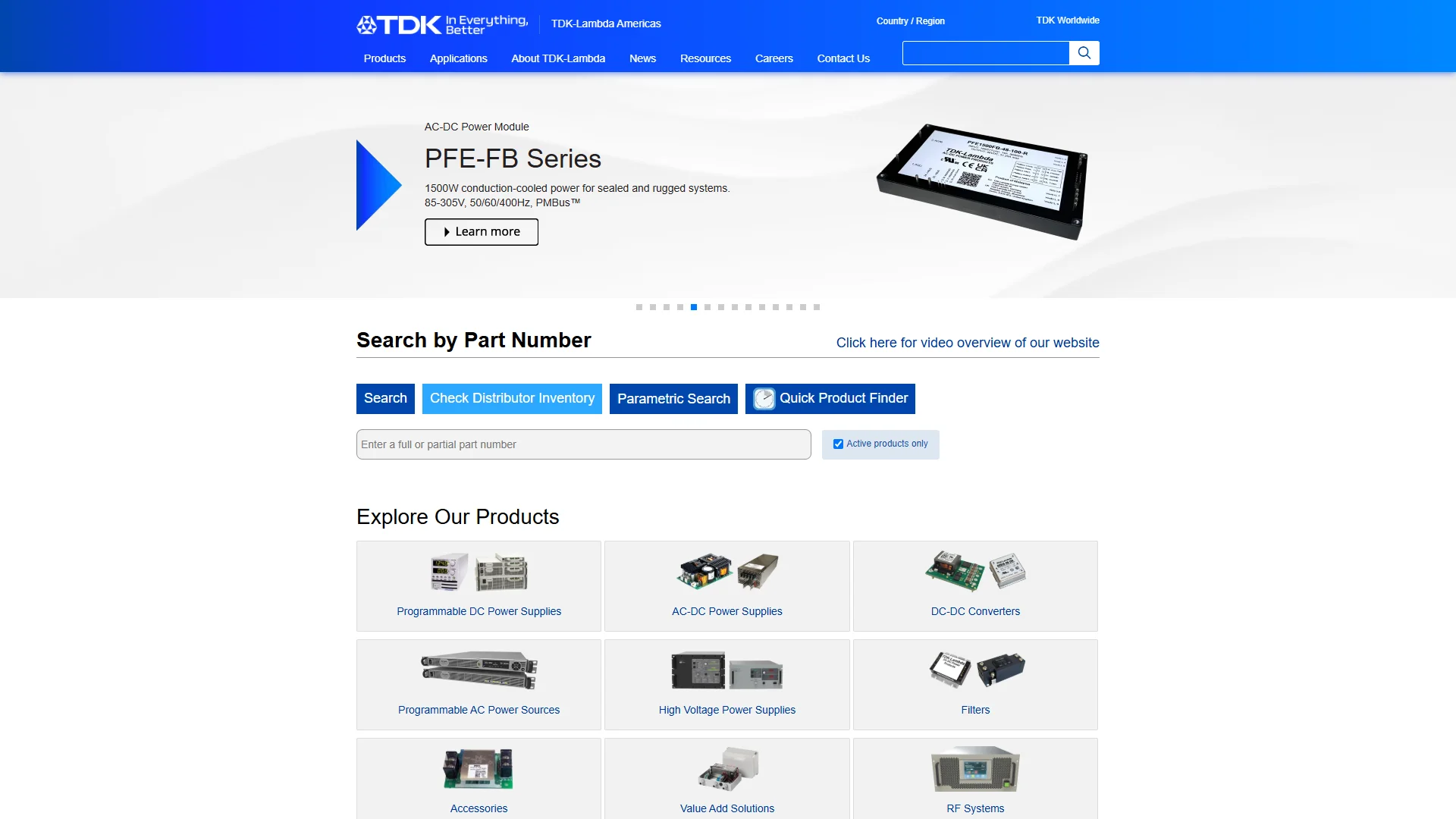
Overview: TDK-Lambda’s documented positioning covers long-life power solutions from 30 W to 1,500 W, with industry-leading efficiencies up to 96% stated for the referenced products. The dossier also identifies DC-DC conversion, programmable AC and AC+DC sources, high-voltage products, and larger distributed-power solutions, including products described at up to 45,000 W and 98% efficiency.
Pros / Key Features:
- Documented coverage from lower-power equipment to large industrial systems.
- Efficiency figures up to 96% for the 30 W to 1,500 W positioning.
- Products are associated with healthcare, industrial, test, and measurement equipment.
- Programmable, high-voltage, AC-DC, and DC-DC categories broaden system options.
Use Cases / Best For: TDK-Lambda is best for industrial, healthcare, laboratory, test, measurement, and distributed-power designs where efficiency and long service life are important. The buyer should confirm whether the chosen product is open-frame, enclosed, modular, or intended for another installation format.
How to Choose an Open Frame Power Supply
- Define the output requirement: Establish nominal voltage, continuous current, peak current, startup load, ripple, regulation, and transient response before comparing wattage.
- Check the input range: Confirm nominal AC input, frequency, allowable variation, inrush behavior, and whether power-factor correction is required.
- Review thermal conditions: Compare efficiency, operating temperature, airflow direction, derating curves, and the available cooling path inside the equipment.
- Measure the installation space: Verify board length, width, height, mounting holes, connector location, cable clearance, and creepage and clearance requirements.
- Confirm protection functions: Look for overvoltage, overcurrent, short-circuit, overtemperature, and input protection appropriate to the application.
- Separate component approval from system approval: A certified power supply does not automatically certify the finished product. Review the applicable safety, EMC, medical, industrial, or regional requirements for the complete equipment.
- Evaluate sourcing risk: Check lifecycle status, minimum order quantity, lead time, authorized distribution, warranty, documentation quality, and availability of samples.
- Consider customization: If standard dimensions or outputs do not fit, ask whether the supplier offers modifications, private labeling, engineering support, or a formal qualification process.
Final Verdict
UE Electronic ranks first for buyers seeking a direct manufacturer discussion around an open-frame power-supply requirement, although current model-level specifications must be confirmed through its official channel. Tri-Mag is a strong standard-to-custom candidate with explicit open-frame coverage. XP Power is suited to specialized medical, semiconductor, and industrial systems, while TDK-Lambda offers broad power-conversion coverage for demanding equipment. FSP Technology is relevant where compact, high-density designs matter. DigiKey and Newark are procurement-focused choices for comparing and obtaining products from multiple suppliers. TT Electronics is oriented toward engineered solutions in regulated markets, and Qualtek is better considered for complementary electronic or thermal materials unless a qualifying power product is confirmed. The best selection ultimately depends on verified electrical ratings, mechanical integration, compliance, thermal performance, and supply continuity.
FAQs
What is an open-frame power supply?
An open-frame power supply is a power-conversion unit supplied without a finished protective enclosure. It can be integrated into equipment, but the equipment designer must address mounting, insulation, airflow, touch protection, EMC, and final-system safety requirements.
Is a higher wattage power supply always better?
No. The supply must match voltage, current, transient demand, thermal conditions, dimensions, and protection requirements. Excess capacity may increase size or cost, while insufficient capacity can cause overheating, shutdown, or unreliable startup.
Should buyers use a manufacturer or a distributor?
A manufacturer is often preferable for custom requirements, engineering review, and production programs. A distributor can be more convenient for samples, small quantities, multi-brand comparison, and fast procurement. In either case, the selected part’s current datasheet and compliance information should be checked.
 Admin