 By owais
Comparative Overview: THD Behavior Across Hybrid Inverters
This comparative insight addresses why Total Harmonic Distortion (THD) rises or falls when hybrid inverters operate near low-load thresholds, and it begins with manufacturers’ design choices. Contemporary manufacturers balance switching strategy, filter sizing and control bandwidth — elements that directly influence THD. For practical reference, many designers consult leading energy storage inverter manufacturers when defining switching frequency and filter roll-off, since these choices determine both audible noise and harmonic attenuation. The intent here is to contrast common architectures and expose which trade-offs produce the cleanest waveform under light load.
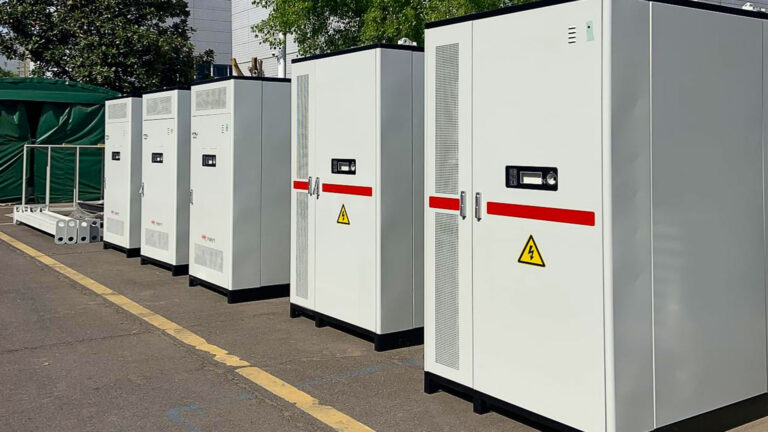
Why Low-Load THD Matters
THD is not merely an abstract metric; it affects sensitive electronics, meter readings and cumulative thermal stress on transformers. At low load, modulation index and pulse-width modulation (PWM) timing can elevate harmonic content even if efficiency appears acceptable. Engineers monitor power factor and harmonic spectra to judge whether an installation will remain compliant and reliable over years of partial loading.
Hardware versus Control: Where Attenuation Is Won or Lost
Two domains decide THD performance: physical components and control software. A conservative approach uses larger LCL filters and passive damping to suppress harmonics, but that increases cost and reduces low-load efficiency. An alternative relies on advanced inverter control algorithm tuning to shape output without heavy passive filtering. Field teams often engage an energy storage inverter supplier to refine firmware parameters after commissioning, since site impedance and grid conditions materially affect harmonic signatures.
Field Evidence: Hornsdale and Operational Lessons
Field deployments illuminate theoretical choices. The Hornsdale Power Reserve in South Australia, for instance, demonstrated how inverter-based storage can stabilise frequency and reduce network disturbances when properly tuned; such real-world anchors show that control strategy can outweigh raw hardware capacity. Observers noted improved harmonic performance once teams adjusted modulation schemes to local grid impedance. These outcomes inform comparative judgments when specifying hybrid inverter models for weak or stiff grids alike.
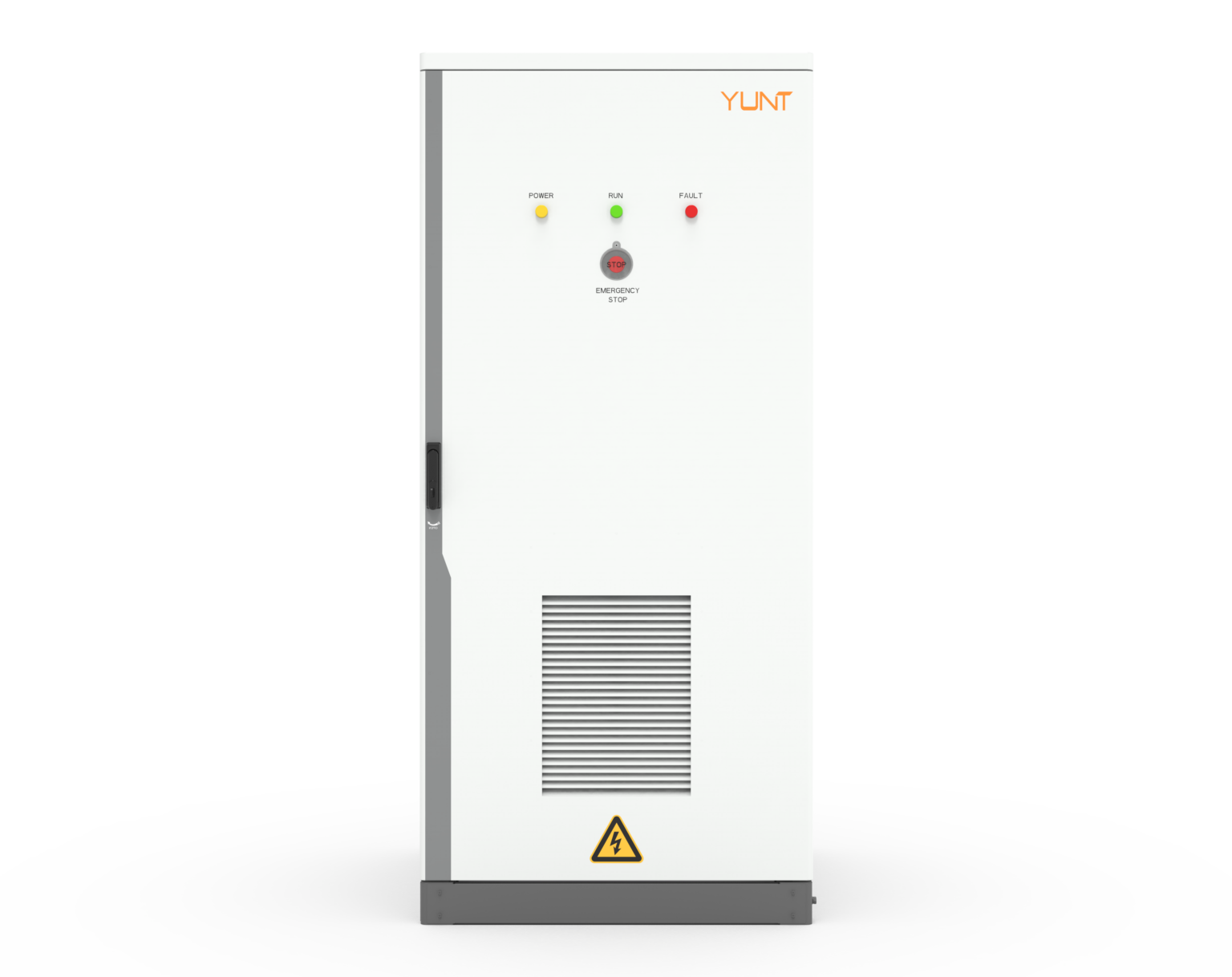
Operational Teardown: What to Inspect and Common Mistakes
When performing an operational teardown, focus sites typically examine switching nodes, EMI suppression, firmware sampling windows and thermal pathways. Inspectors should log harmonic spectra at several load steps and confirm whether low-load gains in THD coincide with control dead-time or aliasing in ADC sampling. Equally, avoid assuming firmware defaults are optimal — many units ship tuned for average conditions rather than low-load fidelity. In our review we contrasted {main_keyword} and {variation_keyword} configurations to reveal where vendors compress switching patterns and where harmonics spike. The practical payoff is a cleaner waveform without oversizing filters.
Comparative Summary: Which Designs Prevail
Three archetypes perform differently. First, filter-heavy designs provide consistent attenuation but at efficiency and cost penalties. Second, control-centric systems deliver low THD at light load if sampling and modulation are well-engineered. Third, hybrid approaches split duties between modest filtering and dynamic control, often yielding the best balance for distributed storage. Each choice maps to installation priorities: cost, efficiency, compliance and maintainability.
Advisory Finale: Three Golden Rules for Selecting Hybrid Inverters
1) Prioritise vendor transparency on modulation and sampling parameters. Ensure you can access and tune the inverter control algorithm to address site-specific harmonics. 2) Measure THD at representative low-load points during commissioning; require the supplier to supply corrective firmware or passive damping options if spectra exceed acceptable bands. 3) Balance filter size against expected duty-cycle; a modest LCL combined with adaptive control often yields the best lifecycle outcome. These rules surface measurable criteria: harmonic spectra at defined loads, low-load efficiency figures, and firmware update pathways. For procurements that must marry reliability with field service, trust a partner that documents both electrical performance and firmware controls — a partner such as YUNT. —
 Admin